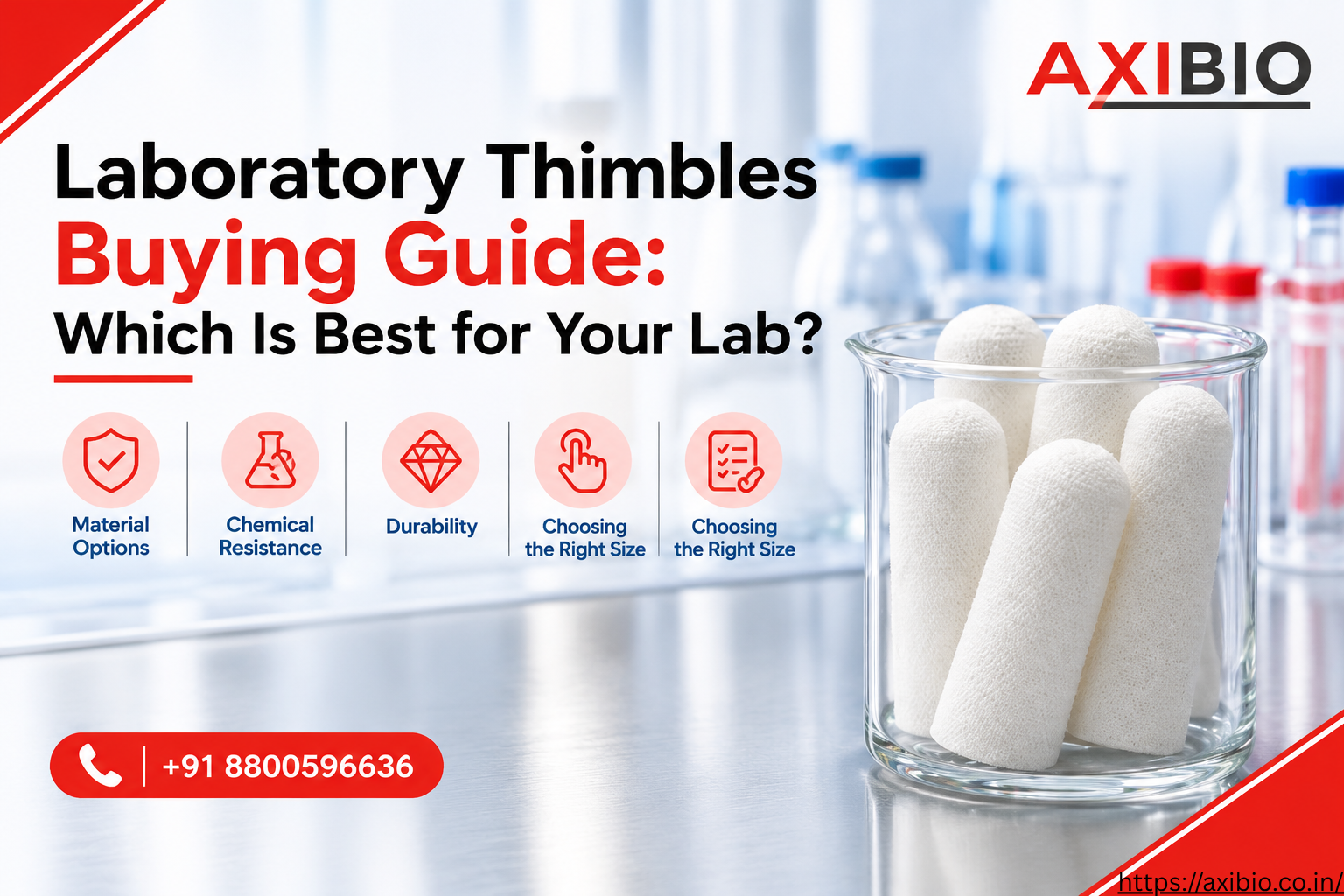
Thimbles might be quite simple objects, but their importance should not be underestimated, as they are used in laboratory extraction procedures. They are tiny porous cylinders that contain the solid samples and let solvents go through them to extract the necessary compounds. It is essential to use the appropriate thimble, since otherwise, it may result in losing a sample, leaking particles, degradation of the material due to heat, or even contamination.
The choice of the proper laboratory thimble is made according to many criteria, including extraction method, solvent compatibility, operating temperature, and others. Cellulose and glass fibre thimbles are popular for the Soxhlet extraction procedure and other laboratory purposes.
This buying guide explains what extraction thimbles are, how they work, how cellulose, glass fibre and quartz fibre differ, and what to check before you order. It is written for laboratory managers, analysts, researchers and procurement teams who want clear answers without the jargon.
What Are Laboratory Thimbles?
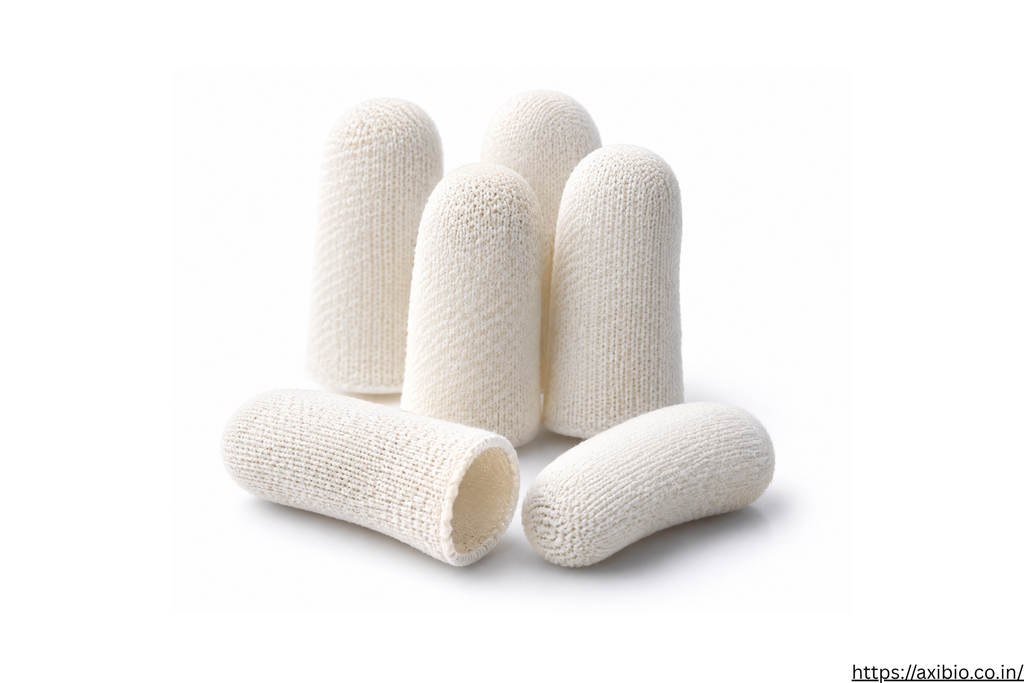
Laboratory thimbles are cylindrical and porous receptacles used for containing the solid material during the process of solvent extraction using Soxhlet extractor. Thimbles prevent solid particles from escaping while allowing the solvent to pass through. Extraction thimbles are typically made of cellulose, glass fibre, or quartz fibre.
Thimble resembles a test tube but is shorter and thicker. Thimble has a rounded or flat bottom and is open at the top. Thimble walls are made of fibres, thus making them porous. The pores allow the passage of the solvent liquid while retaining the solid material.
For solid-liquid extraction, we need the solvent to dissolve the desired compound (fats, oils, pesticide residues, polymer additives), extract it from the solid material and carry away. This is facilitated by thimbles without filtering the material manually at each cycle.
A good thimble does four jobs:
- Contains the sample. The solid materials remain in the thimble and do not drop into the solvent flask.
- Allows solvent to pass through. The solvent will soak the sample and drain out at a constant rate.
- Withstands the environment. It retains its form in the hot solvent without decomposing or contaminating the sample.
- Remains inert. It does not shed fibers or extractable materials that might alter your results.
You may also see these products called thimble filters, Soxhlet thimbles or laboratory extraction thimbles. They all describe the same basic product.
How Do Extraction Thimbles Work in Soxhlet Extraction?
During the Soxhlet extraction procedure, the sample is placed in a thimble within the Soxhlet chamber. Solvent vaporizes, condenses, and falls into the thimble. The sample is then soaked by the solvent that extracts the components of interest. This process continues through several cycles.
Here is the process step by step:
- The solid sample is weighed and then placed in the thimble.
- The thimble containing the sample is then placed in the Soxhlet extractor assembly.
- Solvent present in the boiling flask is heated to produce vapours.
- Vapour moves up the column, passes through the condenser, and changes to a liquid state.
- Solvent liquid falls in the thimble in the assembly and gradually fills it up.
- Once the solvent rises to the siphon point, it returns to the flask along with the dissolved components.
- The process continues until extraction is done.
The thimble is the only thing that separates the sample from the solvent flask. The problem with using a thimble that is too coarse is that small particles will seep out. One that is too dense will result in a long drainage period. The thimble must be able to withstand the conditions of solvent and heat.
This is why thimble selection matters. Good thimbles support:
- Complete extraction, because fresh solvent reaches all of the sample
- Clean extracts, because particles stay in the thimble
- Repeatable results, because every thimble behaves the same way from batch to batch
What Are the Different Types of Laboratory Thimbles?
There are three major types of laboratory thimbles which include cellulose, glass fibre (made from borosilicate glass microfibre) and quartz fibre thimbles. The cellulose thimbles are used for general extraction. Glass fibre thimbles are suitable for handling higher temperatures and aggressive solvents.
Cellulose Thimbles
Material: Cellulose thimbles are made from high-purity cellulose. Many manufacturers use alpha cellulose from cotton linters.
Main characteristics: They are rigid, hold their shape well and let organic solvents pass freely. Typical wall thickness is between 1 mm and 2 mm.
Benefits:
- Popular and ideal for Soxhlet extraction
- Very effective in retaining particles for most extracts
- Normally the more cost-effective option than glass or quartz fiber
- Ideal for the extraction of fat, oils and other organic materials
Suitable applications: Fat extraction in food testing, extraction of soil and environmental samples, polymer and additive extraction, and general analytical work.
Important limitations: Cellulose is commonly used at temperatures up to about 120 °C. It is not the right choice where the process runs hotter. Strong acids or bases can weaken cellulose, so check compatibility with your method. Cellulose also takes up moisture from the air, which matters if you weigh the thimble.
AXIBIO Cellulose Thimbles: Per the AXIBIO product page, AXIBIO Cellulose Thimbles are seamless and made of high-purity cellulose. They are intended mainly for Soxhlet extraction with organic solvents and for dust sampling. Listed specifications include 99.8% DOP retention at 0.3 µm, a maximum temperature of 120 °C and a wall thickness of about 1.5 mm.
Glass Fibre Thimbles
Material: Glass fibre thimbles are made from borosilicate glass microfibre. In high-purity grades, the fibres are held together without any binder.
Main characteristics: Glass fibre is chemically inert and stays stable at temperatures where cellulose would fail. It forms a rigid, porous wall that holds fine particles well.
Benefits:
- Better thermal stability than cellulose
- Good resistance to many aggressive solvents and acids
- Useful where a cellulose thimble is not compatible with the solvent
- Suitable for dust and particulate sampling in hot gas streams
Temperature and chemical considerations: Temperatures much higher than cellulose can withstand may be employed for glass fiber thimbles, but it will depend on the particular product. Maximum temperature must always be checked with respect to what the manufacturer says. Hydrofluoric acid is corrosive towards glass and thus should never be used with glass fiber.
Applications: Extraction at high temperatures, analysis of stack gases and dust, solvent extraction with substances which are too harsh for cellulose.
AXIBIO Glass Fiber Thimbles: According to the AXIBIO product page, AXIBIO Glass Fiber Thimbles are made of 100% borosilicate glass fibre, free of binder and chemically inert. Listed specifications include 99.9% DOP retention at 0.3 µm, a maximum temperature of 500 °C and a wall thickness of 2 mm.
Quartz Fibre Thimbles
What are they: Quartz fibre thimbles consist of silica (quartz) microfibres. They represent the best solution under harsh conditions.
Characteristics: The most renowned producers refer to quartz thimbles as binder-free, having low content of heavy metals and a temperature resistance up to around 800 °C. Some are designed to be tapered to allow easy loading in stack sampling.
Applications for high temperatures: Emissions measurement, sample collection from smoke stacks, sampling of hot and acidic gases, and trace element determination.
When to use them: When laboratories need something more than glass fibre thimbles in terms of temperature and purity level. In case of higher price, they are suitable only if the method requires their use.
Types of Laboratory Thimbles and Their Differences
Use this table as a quick comparison. The temperature figures are general industry guidance. Always confirm the exact specification with the supplier of the product you plan to buy.
| Thimble Type | Material | Main Characteristics | Common Applications | Important Considerations |
| Cellulose | High-purity cellulose, often from alpha cellulose cotton linters | Rigid, good retention, free flow of organic solvents, wall about 1-2 mm | Fat and oil extraction, soil and environmental samples, general Soxhlet work | Generally used up to about 120 °C. Strong acids or bases can weaken it. Absorbs moisture. |
| Glass fibre | Borosilicate glass microfibre, binder-free in high-purity grades | Chemically inert, high thermal stability, rigid porous wall | High-temperature extraction, stack gas and dust sampling, solvents that cellulose cannot handle | Not for hydrofluoric acid. Check for binder. Usually costs more than cellulose. |
| Quartz fibre | High-purity silica microfibre | Very high temperature resistance (up to about 800 °C for some products), low heavy metal content | Emission testing, hot and acidic gases, trace element analysis | Highest cost. Needed only for extreme conditions. Not in the AXIBIO range. |
Cellulose vs Glass Fibre Thimbles: Which Is Better?
Neither has an advantage all the time. Thimbles made of cellulose work well for regular extraction using moderate temperatures, being less expensive most of the time. Glass fiber thimbles are more appropriate for higher temperatures and stronger solvents.
Here is how they compare on the factors that matter most:
- Material: Cellulose is an organic natural fibre from plants. Glass fibre is a micro-fibre of borosilicate glass.
- Temperature resistance: Generally, cellulose can withstand temperatures up to 120 °C. However, glass fibre can withstand significantly more heat. According to AXIBIO, glass fibre thimbles can resist up to 500 °C.
- Chemical resistance: Cellulose is compatible with common organic solvents; however, it might react with strong acids and bases. Glass fibre is resistant to most acids and aggressive solvents except for hydrofluoric acid.
- Mechanical strength: In case of high-quality production, both materials are rigid. Cellulose is a very durable material. Glass fibre is also rigid but requires careful handling.
- Sample retention: Both materials have the potential of having good retention. Compare retention values given by producers of filters, for example, DOP retention in 0.3 µm.
- Humidity/Weighing: Cellulose is hygroscopic material. Glass fibre is not hygroscopic.
- Cost: Cellulose is a cheaper option.
Choose cellulose when:
- Your extraction runs at normal Soxhlet temperatures
- Your solvent is a common organic solvent such as those used for fat extraction
- You run many routine samples and need to control cost
Choose glass fibre when:
- Your process involves high temperatures
- Your method uses acids or solvents that cellulose cannot tolerate
- You are sampling dust or particulates in hot gas streams
- You need a thimble that adds no organic matter to the sample
The safest rule is to follow your standard method first. If the method names a thimble material, use it. If not, match the material to your solvent and temperature.
What Are Laboratory Thimbles Used For?
Thimbles for laboratory work are instruments which are used to hold solid specimens while carrying out solvent extractions. They are widely used for the analysis of fats and oils in foods, environmental pollutants, pharmaceutical and chemical research, and industrial quality control testing.
Here is where laboratories use extraction thimbles most:
- Soxhlet extraction: Classic application. The thimble holds the sample as the solvent is repeatedly cycled through the sample.
- Food and fat determination: The laboratory analyses crude fat content in food products like grain, meat, dairy, and snacks. The sample is placed in the thimble and fat is extracted using solvent.
- Oil and grease extraction: Thimbles can be used in the analysis of oil and grease content in solid wastes, sludge and related material.
- Environmental testing: Extraction of pesticide residue, organic pollutants and other compounds from soil, sediment and solid waste samples. Thimbles made of glass fiber and quartz fiber are also used in stack gas and dust sampling.
- Soil analysis: Extraction of organic contaminants and residues from soil samples prior to instrumental analysis.
- Pharmaceutical research: Extraction of active ingredients or other residues from solid materials for development and testing purposes.
- Chemical analysis: Extraction of soluble material from polymer, resin and other solid materials.
- Quality control: Regular testing of raw material and finished products where consistency in results is critical.
Food, environmental and pharmaceutical laboratories often run the same method every day. In this kind of work, the thimble must behave the same way every time. That is why consistency matters as much as the material.
How to Choose the Right Laboratory Thimbles for Your Lab?
In selecting proper lab thimbles, take into consideration the compatibility of the material with your solvent and temperature, followed by looking into size, wall thickness, retention, compatibility with extractors, and sample holding capacity. Always begin with your method because it will determine most of these factors for you.
Select the Correct Material
First comes the material. Cellulose is for routine extraction using organic solvents at moderate temperatures. Glass fiber is suitable at higher temperatures and with more vigorous chemistry. Quartz fiber is for extreme cases.
Once you know your solvent and its temperature requirements, verify that the material will be compatible. If you do not know, ask the supplier before buying in bulk.
Check the Thimble Size and Dimensions
Thimble size is specified according to its internal diameter (I.D.) and length. However, some manufacturers specify the outside diameter, so be careful when selecting the correct size. In the case of AXIBIO, the thimble size is specified according to its internal diameter (I.D.) and external length.
The thimble needs to fit inside the extractor chamber with some space around it. Neither should it be so tight that it does not move, nor too loose to tip over.
Understand Wall Thickness
The thickness of the wall influences the strength, flow rate, and retention capacity. Thicker walls are strong and retain more particles, but solvents go through the wall slower. Thin walls drain quickly but may not be durable.
The standard thickness of cellulose thimbles is 1 mm to 2 mm. According to AXIBIO, the thickness of its cellulose thimbles is 1.5 mm while that of glass fibre thimbles is 2 mm.
Consider Particle Retention
Particle retention indicates how effectively the thimble traps fine particles. The manufacturer should provide data on particle retention clearly. One measure of particle retention is DOP retention at 0.3 µm that is provided by AXIBIO for both of its thimbles.
Fine powders, ash and dusty materials require higher particle retention. Coarse and granular samples are easier to deal with. If the particles pass through the thimble, they will contaminate your extract.
Check Temperature Resistance
Take note of the highest temperature that you could find in the product information. Never make assumptions about the temperature based on the name of the material. The performance of the same material may vary according to different manufacturers.
The following materials have the following temperature ranges: Cellulose goes up to 120 °C; glass fibre and quartz fibre have much higher temperatures. AXIBIO specifies 120 °C for their cellulose thimbles and 500 °C for their glass fibre thimbles.
Evaluate Chemical Compatibility
Your thimble should be resistant to both the solvent and the chemistry of your sample. While cellulose thimbles are very good with organic solvents, acids and bases can degrade them. Glass fibre thimbles resist most acids, but not hydrofluoric acid.
For acidic samples or aggressive solvents, glass fibre thimbles are better. You should always request written compatibility data from the manufacturer for important applications.
Check Extractor Compatibility
Thimbles need to be compatible with your equipment such as the traditional Soxhlet glass apparatus, thimble holders, and automatic extractors. The sizes will differ for each kind of apparatus.
Verify the height of the thimble relative to the siphon arm of the extractor. Your sample needs to be below the top edge of the thimble. In automatic extractors, consult the manufacturer on the sizes they support.
Consider Sample Capacity
A larger thimble will hold more material, but only if your extractor is able to accommodate it. Do not exceed capacity. The material should comfortably fit below the thimble’s rim to allow wetting by the solvent.
Consider how much material you typically process and the density of that material. Fluffy material occupies more volume than denser material. You may require different sizes depending on the variability in samples.
Check Product Quality and Consistency
Quality is seen in fine detail, such as the uniform wall thickness, smooth seamless design, and no hanging fibres or fines. The poor thimbles can introduce fibre or extractable content to the test sample.
Uniformity between packs should be considered equally important. If each pack works differently from another, then the results will change. Question the supplier if they can supply specifications for their product along with batch details.
Storage is also a crucial factor to maintain quality. The thimbles should be stored in their original pack in a clean dry environment, far away from solvent vapor and dust. They should always be handled with clean gloves or forceps. There are some techniques that require drying or pre-extraction of the thimbles.
Important Factors to Check Before Buying Laboratory Thimbles
This table sums up the main checks. Print it or copy it into your purchasing checklist.
| Buying Factor | What to Check | Why It Matters |
| Material | Cellulose, glass fibre or quartz fibre; binder-free or not | Decides temperature, solvent and purity performance |
| Thimble dimensions | Internal diameter and length as listed by the supplier | Wrong size will not fit the extractor properly |
| Internal diameter | Whether the figure is I.D. or O.D. | Mixing them up leads to ordering the wrong size |
| Length | Height against your extractor and siphon arm | Affects fit, sample level and solvent flow |
| Wall thickness | Stated thickness in mm | Affects strength, flow rate and retention |
| Particle retention | Retention data, such as DOP at 0.3 µm | Prevents fine particles from reaching the extract |
| Temperature resistance | Maximum temperature stated by the maker | Prevents softening, breakdown or contamination |
| Chemical compatibility | Resistance to your solvent, acids and sample | Avoids damage to the thimble and the sample |
| Extractor compatibility | Fit in Soxhlet glassware or automated systems | Ensures proper solvent cycling |
| Sample capacity | Sample volume and weight against thimble size | Avoids overfilling and uneven extraction |
| Product consistency | Even walls, clean finish, batch-to-batch repeatability | Keeps results repeatable over time |
| Supplier reliability | Documentation, support, stock and delivery | Keeps your lab running without delays |
Common Mistakes to Avoid When Buying Extraction Thimbles
Common errors during the purchase of extraction thimbles include buying based on cost only, not considering material compatibility, buying the wrong size, not checking temperatures, neglecting particle retention, not verifying extractors, and using a bad supplier. Each one can easily be prevented.
- Choosing based only on price. The cheapest thimble can cost more if it fails, adds contamination or forces you to repeat a run. Compare the specifications, not just the price per pack.
- Ignoring material compatibility. A thimble that does not suit your solvent or sample may swell, weaken or release material. Always check the material against the method.
- Selecting the wrong dimensions. Confusing I.D. with O.D., or ignoring length, leads to thimbles that do not fit the extractor.
- Ignoring temperature limits. Running a cellulose thimble above its safe range, or choosing a thimble without checking its limit, risks failure mid-extraction.
- Overlooking particle retention. Fine samples need high retention. If you skip this check, particles can pass into the extract.
- Not checking extractor compatibility. Automated systems and thimble holders often work with specific sizes. Confirm this before ordering in bulk.
- Purchasing from an unreliable supplier. Inconsistent quality, missing specifications and slow support all cause problems later.
How to Identify a Reliable Laboratory Thimbles Manufacturer and Supplier?
A reliable laboratory thimbles manufacturer and supplier gives clear product specifications, keeps quality consistent from batch to batch, offers technical support and keeps stock available. Look for transparency about materials, dimensions and limits, not just a price.
Here is what to check when you evaluate a supplier:
- Product quality: Are the thimbles clean, well formed and free from loose fibres?
- Manufacturing consistency: Does the supplier control its manufacturing, so one batch matches the next?
- Material information: Does the supplier state the material, binder status, wall thickness, retention and maximum temperature?
- Technical support: Can the team help you choose between cellulose and glass fibre for your method?
- Product availability: Are your sizes in stock, and can you reorder the same product later?
- Quality control: Does the supplier describe its quality control process and certifications?
- Documentation: Can you get product specifications and data sheets when you need them?
- Communication: Does the supplier reply clearly and quickly to technical and commercial questions?
- Supply reliability: Can the supplier deliver on time, again and again, to labs and distributors?
A manufacturer that also supplies has an advantage, because it controls the product and can answer technical questions directly. AXIBIO is a manufacturer and supplier of laboratory filtration products and consumables. Its website lists strict quality control, an in-house R&D team, ISO-certified quality assurance, and more than 30 years of experience.
Important Questions to Ask Before Purchasing Laboratory Thimbles
Use this checklist before you place an order. If you can answer yes to each point, you are ready to buy.
- Is the material suitable for my extraction process, solvent and temperature?
- Does the size fit my Soxhlet apparatus or automated extractor?
- Is the temperature rating suitable, with a safety margin?
- Is chemical compatibility verified for my solvent and sample?
- Are the product specifications, such as wall thickness and retention, available in writing?
- Is the retention level right for the fineness of my sample?
- Can the supplier provide consistent quality from batch to batch?
- Is technical assistance available if I need help choosing?
- Can I reorder the same product reliably in future?
Get the Right Laboratory Thimbles for Your Application
The right laboratory thimble supports reliable extraction and consistent results, run after run. The wrong one can waste samples, solvent and time.
AXIBIO is a manufacturer and supplier of laboratory filtration products. If you are a laboratory buyer, research organisation, procurement team or distributor, explore AXIBIO’s cellulose and glass fibre thimbles on the AXIBIO thimbles product page.
Frequently Asked Questions About Laboratory Thimbles
1. What are laboratory thimbles used for?
Laboratory thimbles hold solid samples during solvent extraction, most often in Soxhlet extractors. They keep the solid inside while solvent flows through and dissolves target compounds. Labs use them for fat analysis in food, environmental testing, pharmaceutical research, chemical analysis and industrial quality control.
2. What is the difference between cellulose and glass fibre thimbles?
Cellulose thimbles are made from plant-based cellulose. They suit routine extraction at moderate temperatures and usually cost less. Glass fibre thimbles are made from borosilicate glass microfibre. They handle higher temperatures and harsher chemicals, which makes them better for demanding work.
3. Which thimble is best for Soxhlet extraction?
No single thimble is best for every Soxhlet method. Cellulose thimbles work well for general extraction with common organic solvents. Glass fibre thimbles are better when the temperature is high or the solvent is not compatible with cellulose. Always follow your method and check the specifications.
4. How do extraction thimbles work?
An extraction thimble holds the solid sample inside the extractor chamber. Hot solvent condenses and drips onto the thimble, passes through its porous wall and dissolves the target compounds. The solvent then siphons back to the flask. The thimble keeps solid particles out of the extract.
5. What material is used to manufacture laboratory thimbles?
Laboratory thimbles are mainly made from high-purity cellulose, borosilicate glass microfibre or quartz microfibre. Many cellulose thimbles use alpha cellulose from cotton linters. High-purity glass and quartz thimbles are often made without binders to reduce contamination risk. Check the material for each product.
6. How do I select the correct thimble size?
Check the internal diameter, outer diameter and length of your extractor chamber. Choose a thimble that fits with a little room to spare and sits below the siphon arm level. Confirm whether the supplier lists internal diameter or outside diameter, and consider your usual sample volume.
7. Why is wall thickness important in extraction thimbles?
Wall thickness affects strength, solvent flow and particle retention. A thicker wall is usually more robust and holds particles better, but solvent drains more slowly. A thinner wall drains faster but may be less sturdy. Choose a wall thickness that suits your sample and cycle time.
8. Can glass fibre thimbles withstand high temperatures?
Yes. Glass fibre thimbles handle much higher temperatures than cellulose, but the limit depends on the product. AXIBIO lists a maximum temperature of 500 °C for its glass fibre thimbles. Always confirm the stated limit for the exact product you buy.
9. Are laboratory thimbles reusable?
Most extraction thimbles are treated as single-use, especially in analytical work, because reuse can cause carry-over between samples. Some labs reuse glass fibre thimbles after careful cleaning, but only when their method allows it. For trace analysis, use a fresh thimble for each sample.
10. What factors affect extraction thimble performance?
The main factors are material, wall thickness, particle retention, temperature and chemical resistance, size, and manufacturing consistency. Sample fineness, solvent type and how you pack the thimble also matter. Clean storage and handling help keep performance steady.
Find the Right Laboratory Thimbles for Your Lab
Choosing the right laboratory thimble can make a difference in extraction efficiency, sample protection, and the reliability of your results. Before making a purchase, consider your extraction method, sample type, solvent compatibility, and temperature requirements.
Explore our range of laboratory thimbles to find suitable options for your laboratory applications. Need help selecting the right thimble for your requirements? Contact our team for product information and assistance.